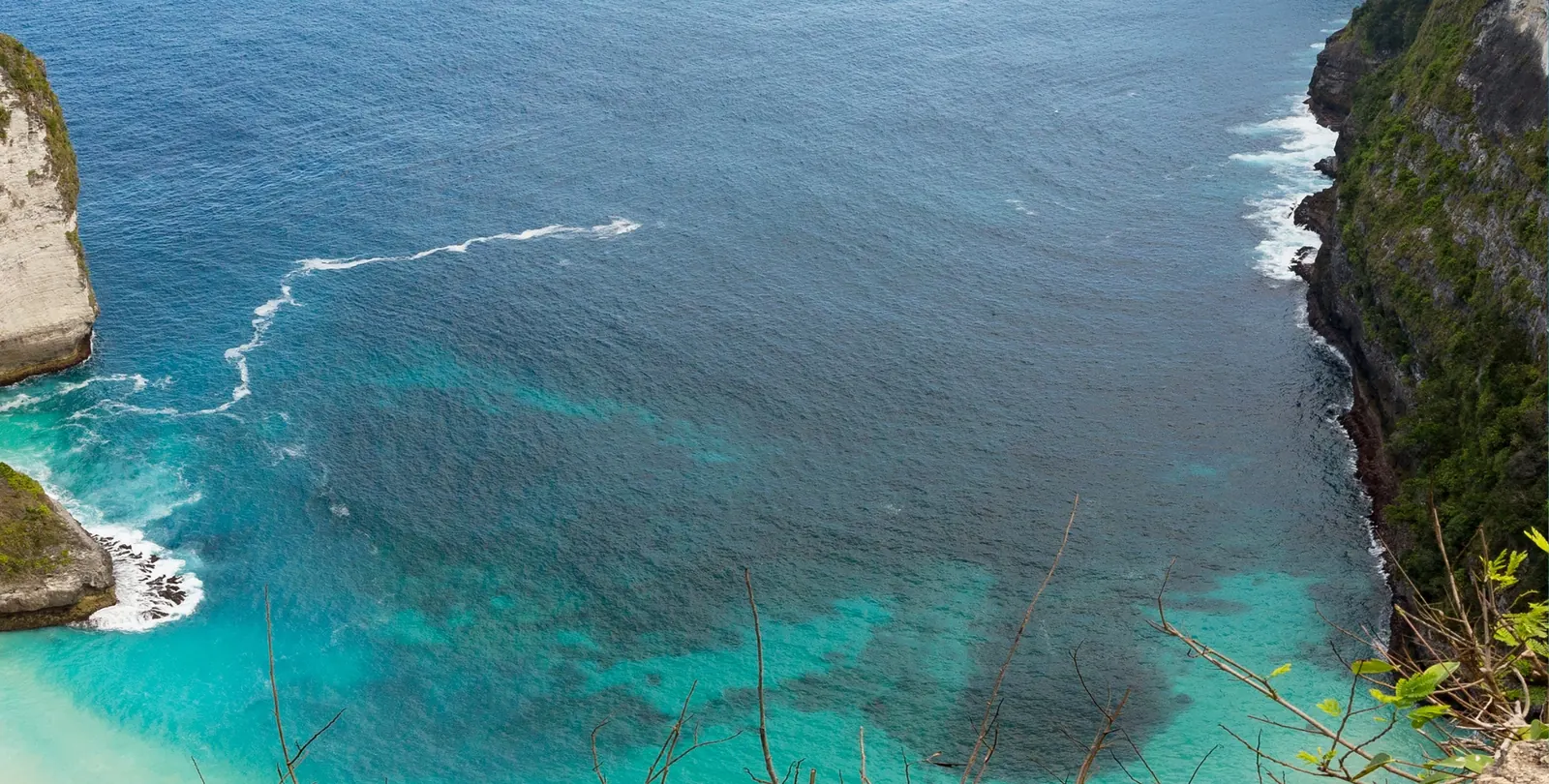
Nusa Penida, a short boat ride from Bali, is home to a large population of reef manta rays. At Manta Point they visit a cleaning station where small fish remove parasites from their skin. While they wait their turn, the mantas circle slowly above divers. It is a calm, close and unforgettable encounter.
Manta Point and Manta Bay
There are two well-known manta sites on the south coast of Nusa Penida.
- Manta Point is the cleaning station. Divers settle beside a rocky area at roughly 8 to 15 metres and watch the mantas come in.
- Manta Bay is a shallower feeding area where mantas cruise near the surface. It is often used for snorkelling and for divers who are newer to open-ocean conditions.
Your guide decides which site to dive based on swell, current and where the mantas have been seen that day.
What the conditions are like
The south coast of Nusa Penida faces the open Indian Ocean. That is why the mantas are there, and it is also why conditions demand some respect.
- Surge and swell are common. You will move back and forth near the bottom, so stable buoyancy is important.
- Cold water can arrive with upwellings. Temperatures of 18 to 20 °C are possible, especially in the middle of the year.
- Visibility varies, from around 10 metres on plankton-rich days to more than 20 metres.
None of this is extreme for a certified diver with a good guide, but it is a different experience from a calm reef dive.
How to behave around mantas
Mantas return to this cleaning station because they feel safe there. Keeping it that way benefits everyone.
- Stay low and still beside the cleaning station rather than swimming over it.
- Never chase, touch or block the path of a manta.
- Keep at least three metres away and let the manta decide how close to come.
- Do not use flash photography directly at a manta's eyes.
How the day works
You are picked up from your hotel and taken to the harbour in Sanur. The boat crossing to Nusa Penida takes around 45 minutes. A typical day includes two or three dives at different sites around the island, depending on the package and conditions, with lunch between dives.
Best season
Mantas are present all year. The dry season from April to November generally brings calmer seas and easier crossings. From July to October the water is colder, and that is also the season when mola-mola visit nearby sites such as Crystal Bay.
Frequently asked questions
Are manta rays guaranteed at Manta Point?
No wildlife encounter can be guaranteed, but the reef mantas at Nusa Penida are resident year-round and are seen on the large majority of dives.
Do I need to be an advanced diver?
Open Water divers can dive Manta Point in good conditions. The site has swell and surge, so good buoyancy matters. Your guide checks conditions on the day and picks the best spot.
How cold is the water?
Usually between 22 and 27 °C, but cold upwellings can drop it to around 18 to 20 °C, especially from July to October. A 5 mm wetsuit is recommended.
Can I snorkel with the mantas instead?
Mantas often come close to the surface at Manta Bay, so snorkelling encounters are possible. Our Nusa Penida snorkelling trip is on the same price list.