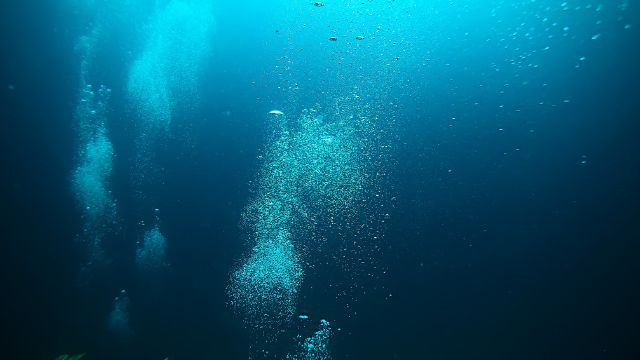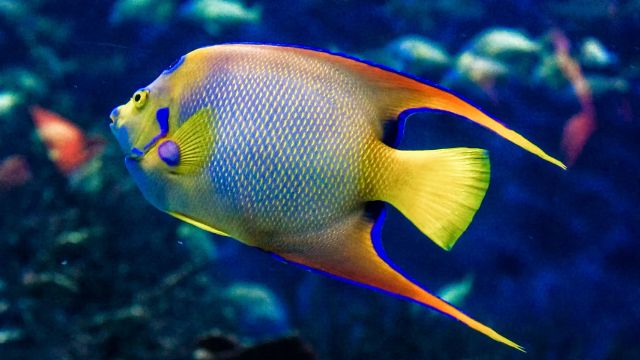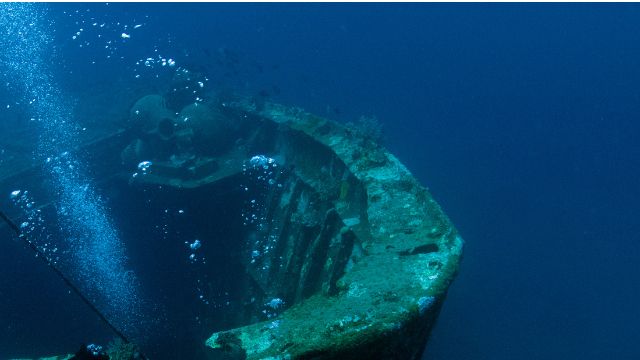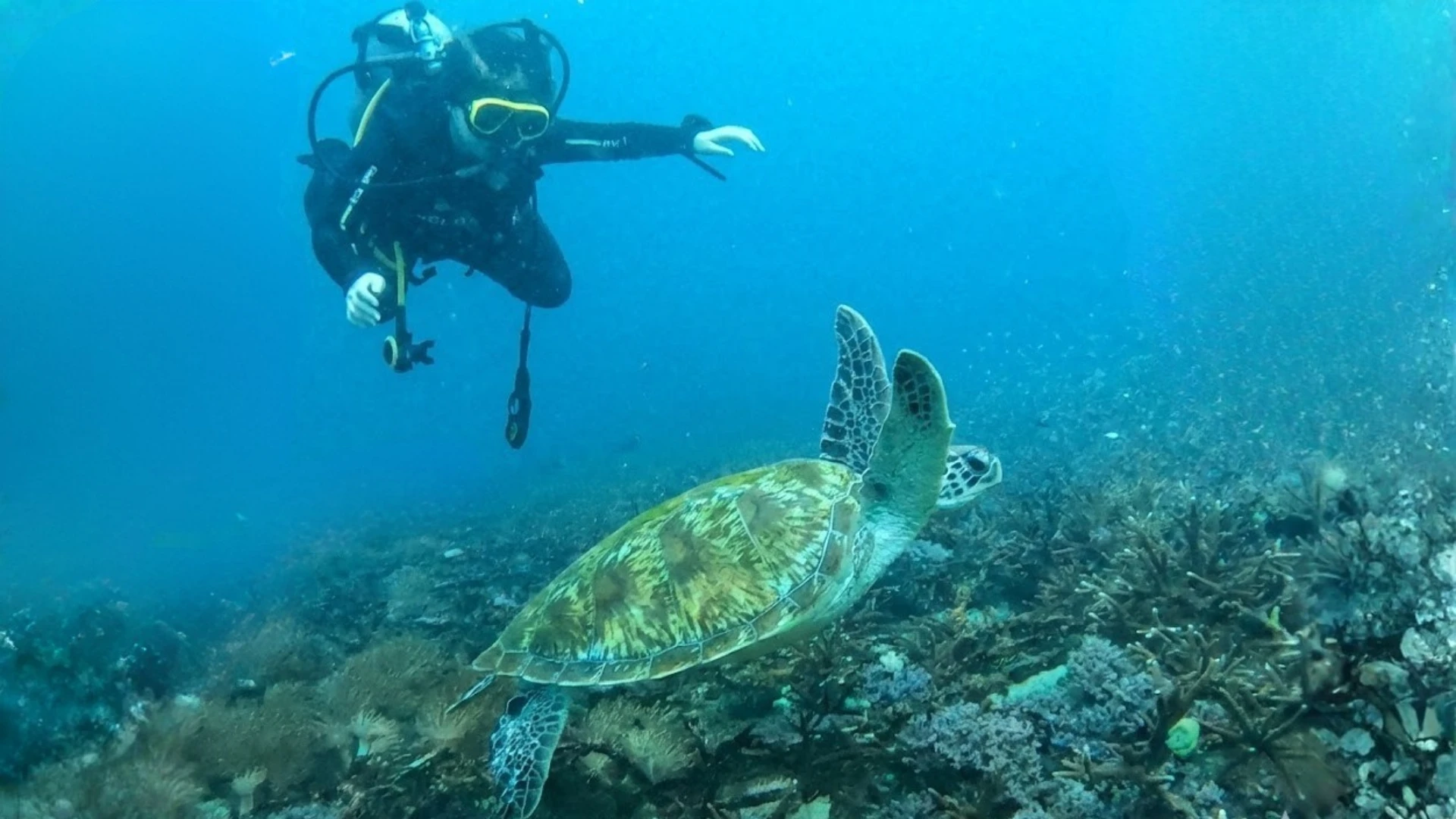
Padang Bai is a small harbour town on Bali’s east coast, best known as the ferry port to Lombok. Underwater, it is one of the most versatile areas on the island. Blue Lagoon and Tanjung Jepun are protected bays with sandy slopes and coral bommies, ideal for training and relaxed fun dives. A few minutes offshore by local boat, the islets offer drift dives, steep walls and cooler water that bring in bigger animals.
That mix is why we bring every level of diver here: first-timers on a Try Scuba Diving day, Open Water students on their ocean dives, and experienced divers looking for sharks or a chance at mola mola.
Why Dive Padang Bai
- Beginner friendly: Sheltered bays from 5m, with easy boat or beach entries.
- Reef sharks: Whitetips resting in the cave at Gili Biaha.
- Macro: Frogfish, nudibranchs and ghost pipefish on the sandy slopes.
- Mola mola season: Chances at Tepekong and Mimpang, mainly July to October.
Main Dive Sites
- Blue Lagoon: Calm, clear and shallow. Reef fish, turtles and octopus.
- Tanjung Jepun: Gentle slope with coral bommies and plenty of macro life.
- Gili Biaha (Shark Cave): Wall dive with resting whitetip reef sharks.
- Gili Tepekong & Mimpang: Currents, canyons and schooling fish. Experienced divers.
A Typical Padang Bai Day
We pick you up from your hotel in the early morning and drive about an hour to Padang Bai. After a briefing on the beach, a local boat takes us to the first site, chosen on the day for your experience level and the current. Lunch is between dives, and you are back at your hotel in the afternoon.
Conditions at the offshore islets change with the tide, so our guides decide the final site plan on the morning of the dive. Safety always comes first: if the current at Tepekong or Biaha is too strong, we dive inside the bay instead.