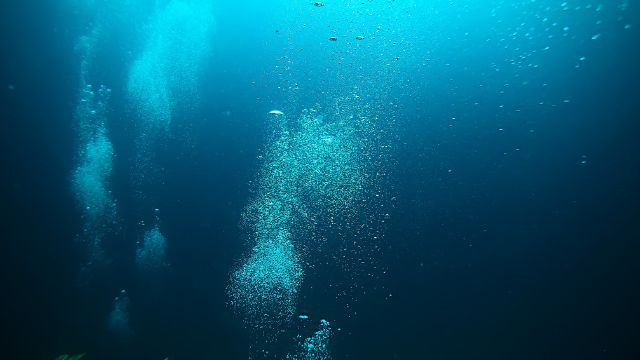
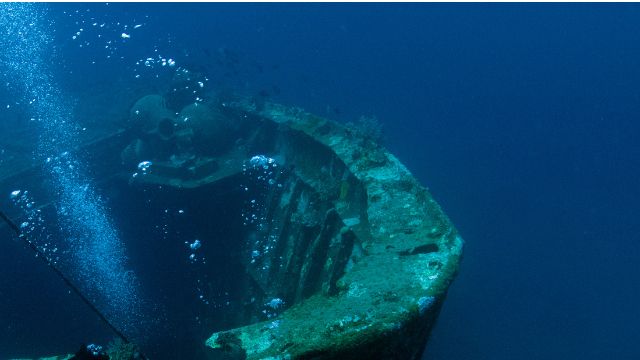
Imagine a 120-meter ghost ship resting on a black sand slope, covered in soft corals and giant sea fans. Because it starts at just 5 meters and drops to 30 meters, the sunlight penetration is incredible, making it a dream for both wide-angle photographers and those looking for their first wreck experience. The shore entry is the defining feature—you gear up on the beach and walk over smooth volcanic pebbles directly into the blue.
Tactical Highlights
- The Bumphead Parade: At 6:30 AM, resident Bumphead Parrotfish emerge from the wreck in a spectacular schooling display.
- Macro Treasures: Look closely at the sea fans for Pygmy seahorses and the volcanic sand for Ghost Pipefish.
- Night Transformation: The wreck comes alive with bioluminescence, Spanish Dancers, and hunting Moray Eels.
- Zero Current: Most days are exceptionally calm, perfect for long bottom times and training.
Site Statistics
- Depth Range: 5m (Top) to 30m (Sand base). Suitable for Scuba and Freediving.
- Visibility: Typically 15m to 30m+. Best in the dry season.
- Temperature: A steady 28°C - 30°C year-round.
- Entry: Shore entry over volcanic pebbles. Sturdy booties are mandatory.
The Human Detail: Historical Context
The USAT Liberty was built in 1918. During its final voyage, it was carrying rubber and railroad ties when it was hit by a torpedo from the Japanese submarine I-166. It didn't sink immediately; it was towed toward Singaraja but began taking on too much water and was beached in Tulamben. For 21 years, it sat on the shore until the devastating eruption of Mount Agung in 1963 slid the vessel into its current underwater position. This history is palpable as you swim through the twisted steel beams now encrusted in life.